
Relays for BACC
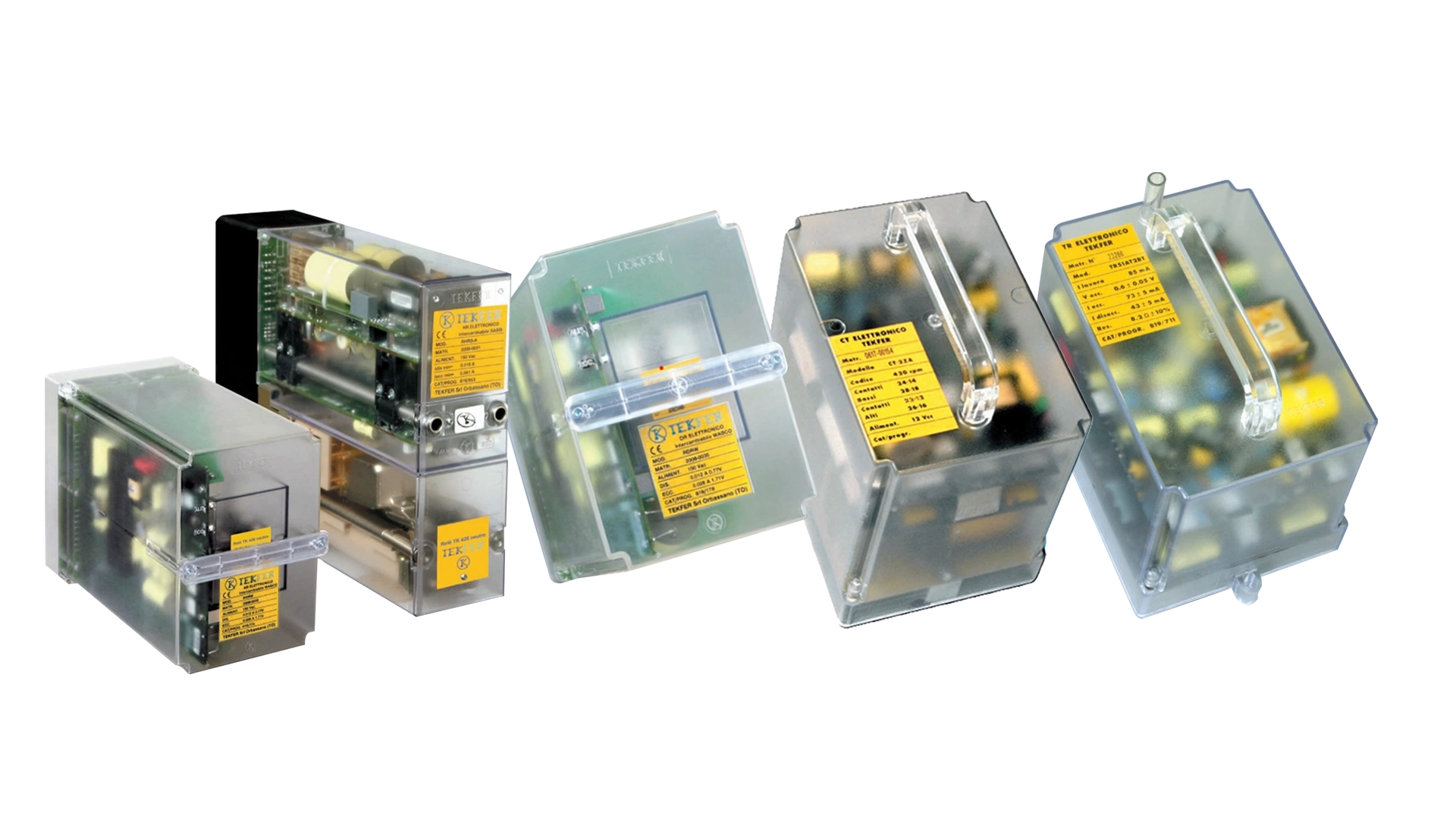
The HR, DR, TR and CT series relays are specifically designed for BACC Wayside applications on railway lines, ensuring high levels of operational safety, intrinsic reliability and interoperability with Westinghouse and Sasib systems used in Italian railway infrastructure.
These devices integrate advanced electronic technologies with electromechanical components certified in accordance with the railway regulations and specifications, ensuring:
- Intrinsic safety
- High contact reliability
- Wide operating temperature range
- Mechanical and electrical compatibility with existing equipment
- Protection against overvoltage and contact bounce
- Ease of replacement and maintenance
The Electronic HR relay is produced in two versions: one for B.A. WESTINGHOUSE and one for B.A. SASIB. It is an electronic device that combines intrinsically safe electronic circuits with highly reliable relays (compliant with RFI TCSSTB SF IS 21 756 A)
Technical features
Electroinic HR for B.A. SASIB
This electronic device is manufactured in a single version.
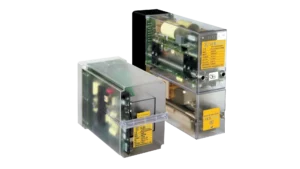
- Power supply voltage: 150Vac
- Excitation current: 0.026 A
- De-excitation current: 0.012 A
- Operating temperature: -25 °C to +70 °C
- Environment in accordance with IS402: Line”
Electronic HR for B.A. SASIB
This electronic device is available in two versions, depending on
whether a de-energisation delay is required: RHRSC
relay with closed forks in short circuit (delayed) RHRSA with
externally configurable contacts.
- Power supply voltage: 150Vac
- Excitation current: 0.041 A
- De-excitation current: 0.019 A
- Operating temperature: -25 °C to +70 °C
- Environment in accordance with IS402: Line”
The Electronic DR is produced in two versions: one for B.A. Westinghouse and one for B.A. SASIB. This electronic device combines intrinsically safe electronic circuits with high-reliability relays compliant with railway specifications and applicable UIC standards.
Technical features
Electronic DR for B.A. Westinghouse
This electronic device is manufactured in a single version:
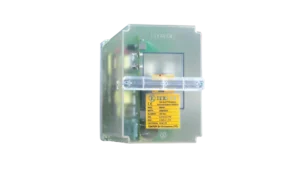
- Power supply voltage: 150Vac
- Excitation current: 0.020 A
- De-excitation current: 0.011 A
- Operating temperature: -25 °C to +70 °C
- Environment in accordance with IS402: Line
Electronic DR for B.A. SASIB
This electronic device is available in a single version:
- Power supply voltage: 150Vac
- Excitation current: 0.057 A
- De-excitation current: 0.028 A
- Operating temperature: -25 °C to +70 °C
- Environment in accordance with IS402: Line
The Electronic TR is produced in two versions: one for B.A. WESTINGHOUSE and one for B.A. SASIB.
This fully electronic device features bounce-free, overvoltage protected output contacts.
Technical features
Electronic TR for B.A. Westinghouse
This fully electronic device is available in two versions and is entirely interchangeable with the corresponding versions it replaces.
It is secured to the counterplate by means of a snap-on device. To remove it, pull firmly (approximately 5 kg of force). The mechanical coding is identical to that of the model to be replaced. The negative terminal of the Electronic TR must be connected to the negative terminal of the GA12F control unit. A pair of red/green LEDs flashing in code indicates correct TR operation.
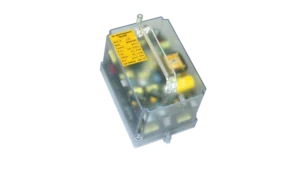
- Power supply voltage: 12 Vdc +30% -25%
- Typical current consumption: 25 mA @ 12 Vdc
- Excitation input current: 18 ± 2 mA
- Excitation input voltage: 2.43 ± 0.2 V
- Excitation input resistance: 135 Ω ± 10%
- De-excitation input current: 8 ± 2 mA
- Insulation resistance: >10 MΩ
- Operating temperature: -25 °C to +70 °C
- Environment in accordance with IS420: Line
Electronic TR for B.A. SASIB
The supplied accessories are used to secure the TR to the counterplate and are fully equivalent to the existing fastening system.
It is necessary to connect the negative terminal of the RE filtered power supply unit or the L21 terminal of the TD to the negative terminal of the TR (terminal 11 of the counterplate). The power consumption of the Electronic TR is extremely low, ensuring that the RE is not overloaded.
- Power supply voltage: 10 Vdc +30% -25%
- Typical current consumption: 40 mA @ 10 Vdc
- Excitation input current: 73 ± 5 mA
- Excitation input voltage: 0.60 ± 0.05 V
- Excitation input resistance: 8.2 Ω ± 10%
- De-excitation input current: 43 ± 5 mA
- Insulation resistance: > 10 MΩ
- Operating temperature: -25 °C to +70 °C
- Environment in accordance with IS420: Line
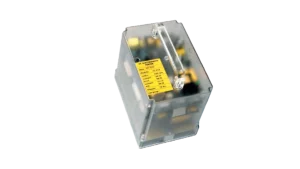
The Electronic CT is produced in two versions: one for B.A. WESTINGHOUSE and one for B.A. SASIB. This fully electronic device features bounce-free, overvoltage protected output contacts.
Technical features
Electronic CT for B.A. Westinghouse
This fully electronic device is available in two versions and is entirely interchangeable with the corresponding versions it replaces.
It is secured to the counterplate by means of a screw that replaces the original hook. The mechanical coding is identical to that of the model to be replaced. A pair of red/green LEDs flashing in code indicates correct CT operation.
- Power supply voltage: 12 Vdc +30% -25%
- Current consumption: max 65 mA
- Code accuracy: ± 1 cycle
- On/Off Ratio: 50/50 ± 3
- Operating temperature: -25 °C to +70 °C
- Environment in accordance with IS420: Line
Electronic CT for B.A. SASIB
The supplied accessories, fully equivalent to the original ones, are used for installation.
- Power supply voltage: 10 Vdc +30% -25%
- Current consumption: max 65 mA
- Code accuracy: ± 1 cycle
- On/Off Ratio: 50/50 ± 3
- Operating temperature: -25 °C to +70 °C
- Environment in accordance with IS420: Line